Tag Archives: love

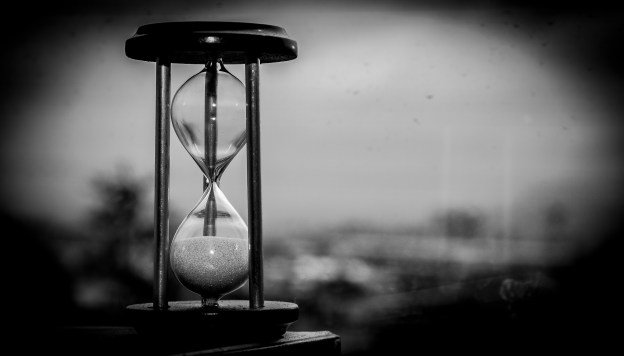
Hourglass / Image by Eduin Escobar from Pixabay

60 years of sands through the hourglass on ‘Days of our Lives’

It was 60 years ago today, Nov. 8, 1965, “Days of our Lives” premiered, and the sands began slipping through the hourglass.

For some, that hourglass wasn’t just a symbol of a daytime drama—it was part of the rhythm of our lives. I grew up with this show. I grew up in Salem, in a way. The Bradys, the Hortons, the DiMeras—they’re not just fictional families. They feel like part of mine.

For decades, “Days” has been a constant. Through school days, college years, life changes, heartbreaks, illnesses, summer breaks and holidays. It’s been there.

And not just as background noise, but as a thread—a familiar presence that grew and changed with me. Every dramatic twist, every outlandish plot (every baby stolen, DNA switched, elevator shaft “death”) is a moment of real emotion that made its mark. And still does.

I remember Marlena’s first possession storyline like it happened yesterday. The absolute audacity of it. I’d never seen anything like that on daytime TV. The levitation. The eyes. The chapel scenes. It was over-the-top and absolutely unforgettable.

During a medical recovery years ago, I found the storyline pieced together on YouTube and relived every moment.

Then, years later, they “Days” did it again. And somehow, it worked—again. Marlena, the heart of Salem, taken over by the devil—not once but twice. Deidre Hall carried those storylines with elegance and fire, grounding even the wildest scenes in something deeply human.

And then came Will Horton’s coming-out story. The way it unfolded felt real, complicated, emotional. It didn’t just check a box—it honored a journey. Watching Will wrestle with his truth, watching Marlena support him, seeing that story handled with such depth—it meant something. For a lot of people, it was the first time they saw a version of themselves on daytime TV. For others, it was a master class in empathy. I remember watching those scenes and thinking: this show, for all its outlandishness, has never been afraid of telling human stories.

Then this year, we lost John Black, as Drake Hogestyn died in 2024. And for longtime viewers, that was a gut punch. John Black wasn’t just another leading man. He was the rogue, the anchor, the protector, the lover. His chemistry with Marlena was lightning in a bottle. When the show said goodbye to him, it was heartbreak on top of heartbreak. But it was also beautiful. Thoughtful. You could feel the love behind every scene, both from the cast and the fans. That’s what this show does best—it honors its own history and the people who helped build it.

Even the move to Peacock—controversial at first—ended up feeling like an evolution. There was frustration, sure. Watching a show that had been free and broadcast for decades shift to a streaming service felt like a loss, like something being taken away. But there was something gained, too. Freedom. Flexibility. The show could push boundaries again, try new things, be a little bolder. And somehow, “Days” found a second wind there. A new generation found it. Longtime fans stayed. We adapted—because that’s what fans of this show have always done.

And still, through all of it, nothing gets me like the Horton Christmases. The tree. The ornaments. The way each family member carefully hangs a name, a memory, a legacy. It’s a small moment, but it hits deep every single year. It always has. Because “Days” has never just been about love triangles and evil twins and wild plot twists. It’s been about connection. Family. Resilience. The way we carry on.

It’s also something I love sharing. One of the best parts of being a “Days” fan is connecting with friends who watch, too. Whether it’s texting after a Friday cliffhanger, swapping theories about who’s behind the latest drama or just laughing about a classic Sami move, those conversations add another layer of joy. We speak the same Salem shorthand. We notice things the other missed. We catch up, fill in gaps, revisit old storylines and carry the show together. It’s more than just watching—it’s a shared habit. A language. A bond.

Sixty years. And somehow, it feels both like forever and like no time at all. I think about all the people who’ve come and gone—on screen and off. The ones who’ve grown up, grown older, left the show, returned again. The ones we’ve lost. And the fans, too—the ones who’ve been watching since day one, and the ones who just started. We’re all part of this story now.

So today, I celebrate not just a show, but a legacy. A lifeline. A constant companion. “Days of our Lives” isn’t just television. It’s memory. It’s comfort. It’s home.

And I’m grateful—for every melodramatic moment, every ornament on that tree, every hour that passed through the hourglass.
Why good relationships require effort

In a world where instant gratification reigns supreme and swipe-left decisions are made in seconds, it’s easy to lose sight of the value of investing time and energy into relationships. Whether it’s a friendship, romantic partnership or professional connection, relationships thrive on the principle of investment. Like any other meaningful endeavor, they require attention, patience and a willingness to show up consistently and with intent.

But why should we invest in relationships, and what’s the return on this investment? I think about this so often, and try to read about other’s experiences and journeys.

Relationships are built, not found

A common misconception is that strong relationships — whether friendships or romances — are found rather than built. We often idolize the idea of “instant connections” and “finding your person.” (As much as I’ve learned not to do this, I still do this at times.)

While chemistry or shared values can create a strong foundation, even the most promising of relationships need effort to truly flourish. The reality is that strong bonds are created over time, through shared experiences, mutual support and — most importantly — a conscious choice to nurture that connection.

When we invest in a relationship, we’re laying bricks of trust, understanding and shared meaning. This foundation becomes the bedrock of a resilient relationship, capable of dealing with conflicts, misunderstandings and challenges. Without that investment, relationships remain surface-level, fragile and prone to dissolve at the first sign of difficulty.

Growth requires vulnerability and commitment

Investing in a relationship requires vulnerability (something I’m not good at) — a willingness to open up, share our thoughts, fears and dreams. It also requires commitment. In friendships, that might mean consistently checking in on someone or being there when they need support. In romantic relationships, it involves showing up for your partner not just when it’s convenient but especially when it’s not.

Without this level of engagement, relationships can easily become transactional — existing only for convenience or superficial interaction. By committing time and emotional energy, we show that we value the other person and are willing to be a part of their growth journey. And in turn, we grow as individuals by learning from them.

The impact of deep, invested relationships

The benefits of investing in relationships are profound. People with strong, meaningful connections experience greater life satisfaction, better emotional well-being and even physical health benefits. When you invest in relationships, you’re creating a network of support, love and wisdom that can uplift you in moments of need.

Take friendship as an example. When you invest in a friend, you become part of their life in a way that enriches both of you. You celebrate each other’s successes, mourn each other’s losses and provide a safe space to express yourselves. This is more than just a casual acquaintance — it’s a relationship where both parties can truly rely on each other.

It’s not about keeping score

One of the challenges people face when investing in relationships is the fear of imbalance. No one wants to feel like they’re putting in all the work. But here’s the truth: Investing in a relationship isn’t about keeping score. Healthy relationships have an ebb and flow, where at times one person might need more support or attention than the other.

By focusing on the bigger picture, and understanding that relationships are dynamic, we realize that the return on investment is often intangible. It’s in the moments of laughter, shared companionship and mutual growth.

The courage to invest

It can be scary to invest in people. There’s always a risk of disappointment, conflict or the possibility that the relationship may not evolve as you hoped. But that risk is a part of life. The real loss is in holding back — choosing not to invest because of the fear of failure or rejection.

Great relationships require courage. They require you to step out of your comfort zone and trust that the other person values the relationship as much as you do. They require patience, as growth often happens in small, almost imperceptible ways. And they require consistency — because deep connections aren’t built overnight.

The reward of meaningful relationships

The relationships we invest in shape who we are. When we give of ourselves, we learn not just about the other person, but about our own capacity for love, empathy and connection. The real reward is not just the relationship itself but the person we become through the process.

In a world that encourages quick fixes and short-term thinking, the willingness to invest in relationships is an act of resistance. It’s a choice to prioritize depth over convenience and meaning over fleeting interactions.

So, whether it’s a friendship, working relationship, family member or romantic connection, don’t be afraid to invest. You’ll find that the time, energy and love you put into the relationship will come back to you in ways far beyond what you ever expected.

Forced romanticism

I originally wrote this column for twodaymag.com — an online dating and social scene magazine for Millennials. This column appeared Feb. 11, 2013, at twodaymag.com.

With the onslaught of forced romanticism we’ll endure this week across social media, in the news, in the workplace and from family and friends, will come the anti-Valentine’s Day crowd.

Call them the 1-percenters, the love-haters or Occupy Valentine’s Day, but the growing number of singles is … well, actually growing.

About half of Americans are single, and ⅓ of all households are occupied with one person, The New Yorker said in a 2012 story.

Despite those numbers, floral shops are scurrying to fill orders of long-stem red roses, bakeries can’t keep “I love you” cookies and cakes in stock and store shelves of those heart-shaped candy boxes will move faster than bread and toilet paper with the threat of 1-inch of snow.

And I can only imagine how busy Kay Jewelers counters will be this week. Ugh.

So as half of America apparently will celebrate Valentine’s Day with a special love, the rest of us have the chance to celebrate Single’s Awareness Day — with its anything but true abbreviation of S-A-D.

“The goal of Singles Awareness Day is to let singles have celebrations, get-togethers, etc., and to exchange gifts with their single friends,” according to SinglesAwarenessDay.com. “The awareness day was established by single people who were just sick of feeling left out on Valentine’s Day, and support of the day is growing every year.”

The website touts Feb. 15 as the big holiday, but I’ve seen other references to Feb. 13 and Feb. 14 as well.

Some Singles Awareness Day events are lighthearted — happy hours, singles gift exchanges and dinner with single friends.

The folks at Smokey Bones even are pushing a Singles Awareness Day happy hour Friday in an effort to give single people a chance to meet others (or maybe allow post-Valentine’s Day couples a chance to test the waters, eh?).

But there really are some great activities you can do just to make someone else’s day special, SinglesAwarenessDay.com says.

“If you have the evening free, why not call a local hospital or nursing home to find out if there’s a patient who doesn’t have family visiting frequently and drop in to wish them a happy Valentine’s Day complete with flowers or a goodie basket,” the website says. “This might turn out to be the most rewarding day of your life. If you choose this route, be sure to have some tissues as it could turn into a teary experience for both of you.”

In previous years, I’ve written cards to cancer survivors through the American Cancer Society Relay For Life events I’m involved with.

Last week, I wrote that men will spend roughly $175.61 on everything from candy, jewelry and dinner for their companion, according to a National Retail Federation study. That same study says women will spend $88.78 on their sweetheart.

So if for nothing else, single folks have a chance to save some cash this week.

While stores, the media and friends likely will talk about the impending day, it is important to remember that if you are single this Valentine’s Day, it’s not the end of the world.

Whether you’re single by choice or by life’s agenda, don’t let that descriptor define who you are.

With half of the country considered single, it’s clear you’re not alone.

The closeted online dater

In this twoday magazine column, I write about how online dating services still have a stigma.

With an estimated 20 million users checking in at least once a month, online dating sites seem as commonplace as updating your Facebook status. It seems everybody knows somebody who’s signed up. And, we’ve all seen the commercials of various dating sites touting their skills at being 21st century matchmakers.

Heck, I’ll even be attending a wedding later this year of a friend who found her soon-to-be husband online. And neither of them seemed shy to say, “Hey, we met online!”

Still, as common as it might seem, finding true love online carries a stigma. Would you admit to having an online matchmaking profile? I sure as hell wouldn’t, even though I do … well, did.

Take a gander at this piece by clicking here.

I’m published all over again!

Some how or another, somebody thought my loveless love life would be good fodder for a magazine. So, I’m a columnist for Two Day Magazine, an online magazine “dedicated to bringing you excitement and romance in a format that is compelling, user-friendly and free.”

My first column is titled, “Ending A Marriage Affects Your Friends, Too.” Please click the link, read it and comment.

Move over Ann Landers and Dan Savage!