If you’ve ever wondered how Pixar creates its iconic animated films, the answers await you at “The Science Behind Pixar,” an immersive exhibit at the Carnegie Science Center.
After experiencing this immersive, hands-on journey myself, I can confidently say this exhibit is a must-see for fans of animation, science and storytelling alike.
Opened in May 2024 and extended through Jan. 26, the two-story, 12,000-square-foot exhibition transforms the PPG Science Pavilion into “PIXARburgh,” drawing visitors of all ages to dive into the fascinating intersection of science, technology, engineering and math (STEM) that fuels Pixar’s creative magic.
A behind-the-scenes look at Pixar’s movie-making process
From the moment you step into “The Science Behind Pixar,” you’re invited to explore the complex world of animation.
The exhibit features more than 50 hands-on activities that break down the intricate steps Pixar takes to bring beloved films like “Toy Story,” “Monsters Inc.” and “Finding Nemo” to life.
At various interactive stations, you can:
Design a robot friend for WALL-E by using magnetic body parts to experiment with how minor changes can impact storytelling.
Adjust lighting on a set from “Up” to see how color and brightness can create entirely different moods.
Control cameras on a large recreation of a set from “A Bug’s Life” to understand how perspective shapes the storytelling process.
These experiences provide a deeper appreciation for the technological brilliance and artistic creativity that go into Pixar’s films.
The exhibit also delivers unforgettable photo moments with life-size recreations of fan-favorite characters. Snap selfies with Buzz Lightyear, Sulley, Mike, Dory, Nemo and WALL-E. These vibrant displays are perfect for Pixar fans of all ages and make for incredible keepsakes.
Pixar’s magic lies in its ability to merge science and creativity, and this exhibit captures that fusion perfectly.
“As Pittsburgh’s most-visited museum, the Science Center strives to connect visitors of all ages with science that ignites curiosity that endures for a lifetime,” Carnegie Science Center Director Jason Brown said in a news release.
Why you should go
Whether you’re a long-time Pixar fan, a STEM enthusiast or simply curious about how animated movies are made, “The Science Behind Pixar” offers something for everyone. It’s an eye-opening, hands-on exploration of the meticulous processes behind the films that have touched our hearts for decades.
Its run was extended for a few more weeks! Don’t miss your chance to explore this one-of-a-kind exhibit before it closes on Jan. 26.
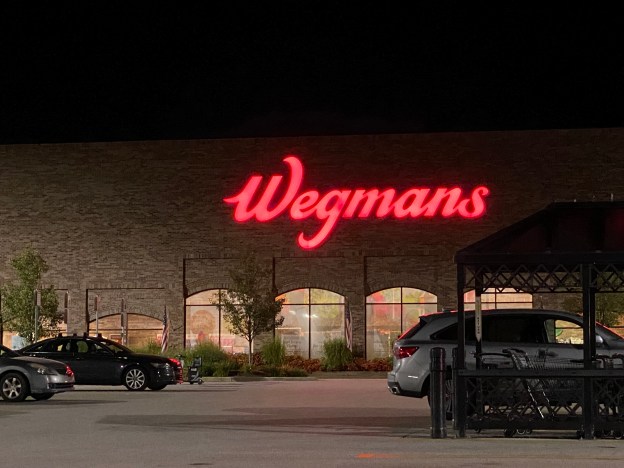
Wegmans will open three new locations in 2025 — including two stores in new markets.
There was speculation in 2024 that Wegmans could be looking at two different locations in the Pittsburgh area — including Cranberry Township, which is in a northern suburb of Pittsburgh, and possibly a location in South Fayette Township in Allegheny County.
Wegmans fans in the Pittsburgh area will have to wait a big longer because none of the company’s three new stores in 2025 are set to open in Western Pennsylvania.
The Rochester, New York-based grocery store, with its cult-like following, will enter Connecticut with a store in Norwalk.
This 92,000-square-foot store will offer 13 full-service checkouts and 15 self-checkouts.
This store will have a two-story parking garage with 551 parking spaces and a bridge into a mezzanine level of the food market.
An “Interesting fact,” Wegmans notes for this store, is that the parking garage will include solar canopies.
Wegmans will enter Long Island, New York, with a store in Lake Grove in February. The 101,000-square-foot store will have more than 630 parking spots, 14 full-service checkouts and 14 self-checkouts.
And, Wegmans notes, the top of the store’s clock tower will be the highest point in Lake Grove.
The company’s third new store for 2025 is in Rockville, Maryland, where Wegmans will open its ninth store in that market.
This 80,000-square-foot store in the Twinbrook Quarter Community will feature two levels of parking below the store.
The “interesting fact” for this store is more peculiar than interesting: Wegmans shoppers will get 90 minutes of free parking.
Wegmans isn’t just a grocery store—it’s an experience.
With its roots in Rochester, New York, the chain has amassed a loyal following that many would describe as cult-like.
Customers rave about the store’s unique ability to make grocery shopping feel like a treat rather than a chore. What makes Wegmans so special?
For starters, it’s the attention to detail.
From the impeccably organized aisles to the high-quality produce, artisanal baked goods and chef-inspired prepared foods, Wegmans takes pride in delivering excellence at every level.
Shoppers know they can rely on Wegmans for items that aren’t just staples but also inspiration—whether it’s the store-made fresh sushi, decadent desserts or its impressive international food selection.
But what really sets Wegmans apart is its customer service.
Employees are trained to be helpful and approachable, creating an atmosphere where customers feel valued.
Many Wegmans fans describe the store as a place that goes beyond transactions—it feels like a community.
Over the years, the grocery chain has become a destination in and of itself, drawing road-trippers and loyalists willing to drive hours just to shop there (I am among them!).
The store even inspires online fan groups and countless social media posts, where customers swap tips, share their favorite finds and celebrate new store openings with a fervor usually reserved for concerts or theme parks.
Wegmaniacs: The passionate fans driving the Wegmans phenomenon
To truly understand Wegmans’ success, you need to know about the “Wegmaniacs.”
This nickname, affectionately given to the grocery chain’s most devoted fans, perfectly captures the enthusiasm—and sometimes obsession—that Wegmans inspires.
The term originated organically, coined by shoppers themselves and embraced in fan groups, online forums and even news coverage.
So, what makes a Wegmaniac?
It’s someone who goes out of their way to shop at Wegmans, whether that means driving hours to the nearest store or marking their calendar for the grand opening of a new location.
For Wegmaniacs, Wegmans is more than a grocery store—it’s a lifestyle.
They rave about the chain’s prepared foods (those subs and sushi!), the high-quality store-brand items and the welcoming shopping experience.
This devotion goes beyond the aisles, too.
Wegmaniacs are known to swap tips about the best seasonal products, track down rare Wegmans finds, and even create ranking lists of their favorite items, from frozen meals to bakery treats.
Social media is alive with posts celebrating Wegmans’ legendary customer service, beautifully curated displays and even its holiday offerings.
For some Wegmaniacs, the brand is a family tradition, passed down through generations of shoppers who have grown up with Wegmans as a staple in their lives.
Others are newer converts, discovering the magic after the chain’s steady expansion into new markets.
Whatever their origin story, one thing is clear: Wegmaniacs don’t just shop—they evangelize.
As a proud Wegmaniac myself, I can confidently say there’s no grocery store quite like it. Two-hour drives to grocery shop at Wegmans became a regular part of my life once I discovered Wegmans.
And as Wegmans prepares to open three new stores in 2025, including two in cities new to the brand, I can only imagine how many more Wegmaniacs will soon be joining the ranks.
After all, once you experience Wegmans, there’s no going back.
Have more time? Keep reading to learn more and donate!
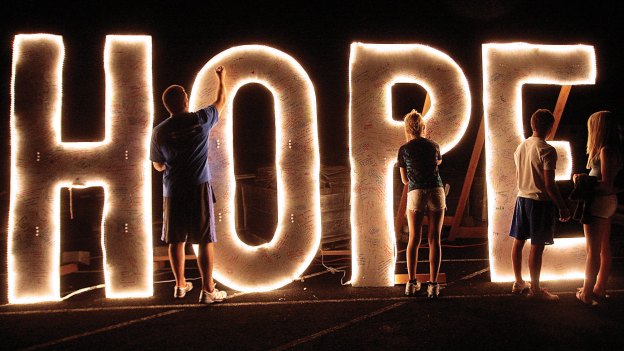
Help fund hope
Your donation to the American Cancer Society helps to fund hope.
The American Cancer Society is at the forefront of the battle against cancer.
In 2022 alone, the American Cancer Society invested $267 million in groundbreaking cancer research. These funds support innovative studies aimed at discovering better treatments, understanding the causes of cancer and improving the quality of life for those affected by the disease. This research is crucial for making strides in prevention, early detection, and treatment of cancer.
The American Cancer Society has funded numerous groundbreaking research projects over the past 50 years that have significantly advanced our understanding and treatment of cancer.
Here are five crucial research projects:
Discovery of the BRCA1 and BRCA2 genes
In the 1990s, American Cancer Society-funded researchers played a pivotal role in identifying the BRCA1 and BRCA2 genes, mutations of which are linked to a higher risk of breast and ovarian cancers.
This discovery has led to the development of genetic tests that can identify individuals at high risk, allowing for preventive measures such as increased surveillance, prophylactic surgeries, and personalized treatment plans.
Development of the HPV vaccine
American Cancer Society-funded research was instrumental in the development of the human papillomavirus (HPV) vaccine, which protects against the virus responsible for the majority of cervical cancer cases.
The introduction of the HPV vaccine has the potential to drastically reduce the incidence of cervical and other HPV-related cancers, offering a powerful tool for cancer prevention.
Advances in chemotherapy for childhood leukemia
The American Cancer Society has supported numerous studies that have improved chemotherapy protocols for treating childhood leukemia, particularly acute lymphoblastic leukemia, or “ALL.”
These advancements have significantly increased survival rates for children diagnosed with ALL, transforming it from a largely fatal disease to one with a high cure rate.
Research on immunotherapy
The American Cancer Society has funded pioneering research in immunotherapy, which harnesses the body’s immune system to fight cancer. This includes work on checkpoint inhibitors and CAR T-cell therapy.
Immunotherapy has revolutionized cancer treatment, offering new hope for patients with types of cancer that were previously difficult to treat, such as melanoma and certain types of lymphoma.
Understanding cancer metastasis
American Cancer Society-funded researchers have made significant strides in understanding how cancer spreads (metastasizes) from its original site to other parts of the body.
This research has led to the development of treatments aimed at preventing metastasis, which is responsible for the majority of cancer deaths. By targeting metastatic processes, these treatments have the potential to improve survival rates and quality of life for patients.
Value of the research
Patients: These projects have led to earlier detection, more effective treatments, and higher survival rates, offering hope and improved outcomes for patients.
Caregivers: Advancements in cancer treatment and understanding help caregivers by providing them with better tools and knowledge to support their loved ones through their cancer journey.
Cancer community: Continued research fosters a deeper understanding of cancer biology, paving the way for innovative therapies and ultimately bringing us closer to a world without cancer.
These contributions by the American Cancer Society underscore the critical role of research in transforming cancer care and improving the lives of patients and their families.
Cancer incidences on the rise as cancer deaths decline
The American Cancer Society expects the U.S. to hit a bleak milestone: More than 2 million new cases of cancer. That’s almost 5,500 per day.
Some cancer types are increasing in specific subgroups. For example, colorectal cancer is rising among people under 55, liver cancer in women, oral cancers linked to HPV and cervical cancer in women aged 30-44.
While four of these cancers (breast, prostate, colorectal and cervical) have screening tests, which can prevent cancer by detecting precancerous lesions, the incidence of six rising cancers is associated with excess body weight: Endometrial, liver, kidney, pancreatic, colorectal and breast cancers.
The rising incidence of cancer affects younger populations as well. Although people aged 65 and older still represent a significant proportion of cancer diagnoses, this group’s share has decreased from 61% in 1995 to 58% in 2019-2020.
Conversely, cancer diagnoses in people aged 50-64 are increasing. This shift is partly due to declines in prostate and smoking-related cancers in older men and rising cancer incidence in those born since the 1950s, potentially linked to the obesity epidemic and other unknown factors.
The proportion of people under 50 diagnosed with cancer has decreased from 15% to 12%, despite an overall rise in cancer incidence in this age group from 1995 to 2020.
Colorectal cancer is notably increasing among those under 50, now the leading cause of cancer death in younger men and the second in women.
The cause remains unclear but may involve lifestyle changes since the 1950s. Cervical cancer is also rising in women aged 30-44, while it has declined in women aged 20-24 who were among the first to receive the HPV vaccine.
Over the past 30 years, the cancer death rate in the United States has steadily declined, saving approximately 4 million lives.
This decrease is attributed to significant progress in smoking cessation, early detection and treatment advancements.
However, the incidence of many common cancers is rising. In 2024, the US is expected to see new cancer cases surpass 2 million, equating to about 5,500 diagnoses daily.
This increase is driven by an aging population and a rise in six of the ten most common cancers: breast, prostate, endometrial, pancreatic, kidney and melanoma.
Projected cancer deaths for 2024 are over 611,000, with more than 1,600 deaths daily.
LGBTQ people face unique risks for developing cancer
LGBTQ people face unique cancer risks and significant disparities in cancer incidence and outcomes. Research indicates disparities across the cancer continuum—from prevention to early detection and treatment—though more data is needed to fully understand these differences.
“The LGBTQ+ population has some differences in exposures that are probably pretty influential in terms of their risk for developing cancer, but we can’t look at the cancer risk because we don’t have data. Data is also key for the development of targeted cancer-control efforts. It’s time the US fills that gap,” said Rebecca Siegel, one of the authors of the 2024 “Cancer Facts & Figures” study.
Currently, population-based information on cancer in the LGBTQ+ community is limited to national surveys that gather data on risk factors and screening practices. However, there are no active methods for collecting comprehensive data on cancer incidence and mortality in this group because sexual orientation and gender identity are not consistently recorded in medical records. This lack of data hampers targeted cancer control efforts and underscores the need for more inclusive data collection practices to address and mitigate these disparities effectively.
Cancer increasingly affecting younger people
Cancer is increasingly affecting younger populations. While cancer risk typically rises with age, the demographics of cancer diagnoses are shifting. In 1995, people aged 65 and older accounted for 61% of new cancer cases, but by 2019-2020, this had dropped to 58%. Meanwhile, the proportion of cancer diagnoses in those aged 50 to 64 has grown, driven by declines in prostate cancer and smoking-related cancers among older men, and a rise in cancers in those born since the 1950s, likely influenced by the obesity epidemic and other unknown factors.
Conversely, the proportion of cancer diagnoses in individuals under 50 has decreased from 15% to 12%, although this group saw an overall increase in cancer incidence from 1995 to 2020. A significant concern is the rise in colorectal cancer among those under 50, now the leading cause of cancer death in men under 50 and the second in women of the same age. This increase is likely due to lifestyle changes starting with those born around 1950. Nearly one-third of individuals diagnosed with colorectal cancer before 50 have a family history or genetic predisposition, prompting recommendations for earlier screening.
Additionally, cervical cancer rates are rising among women aged 30 to 44. In contrast, the HPV vaccine’s impact is evident in women aged 20-24, with a notable decline in cervical cancer incidence from 2012 to 2019.
Progress against cancer lags in communities of color
Racial disparities in cancer remain significant and persistent. Black individuals with prostate, stomach and uterine cancers have double the death rate compared to white individuals. Similarly, American Indian and Alaska Native individuals face twice the death rates for liver, stomach and kidney cancers compared to white people.
Key statistics highlight these disparities:
Black men have the highest overall cancer death rate, 19% higher than white men, primarily due to prostate cancer.
American Indian and Alaska Native people have the highest overall incidence and mortality rates for men and women combined. Alaska Natives have the highest global rates of colorectal cancer incidence and mortality.
Hispanic individuals have lower rates of common cancers like breast and prostate but high rates of infection-related cancers, with cervical cancer incidence 35% higher than in white women.
Black women with endometrial cancer face double the death rate of white women, despite similar incidence, due to later diagnoses and poorer survival rates.
Advancements in cancer treatment and early detection have not benefited minority communities equally. Historical and ongoing racial discrimination has led to significant socioeconomic disparities, limiting access to healthy living conditions, timely cancer diagnoses and high-quality treatment. Segregationist and discriminatory policies in various sectors continue to exacerbate these inequalities, impacting cancer outcomes in these populations.
With YOUR support, the American Cancer Society is making a difference in the fight against cancer through research grants that help to uncover better ways to treat cancer, find cancer and help people with cancer live better lives.
With YOUR support, the American Cancer Society is helping to fund programs and services that provide support to cancer patients, their families and, really, all of us.
Among these programs is the organization’s 24/7 cancer support line, which offers a live human available any hour of the day to answer any questions you might have about cancer. You can call 1-800-227-2345.
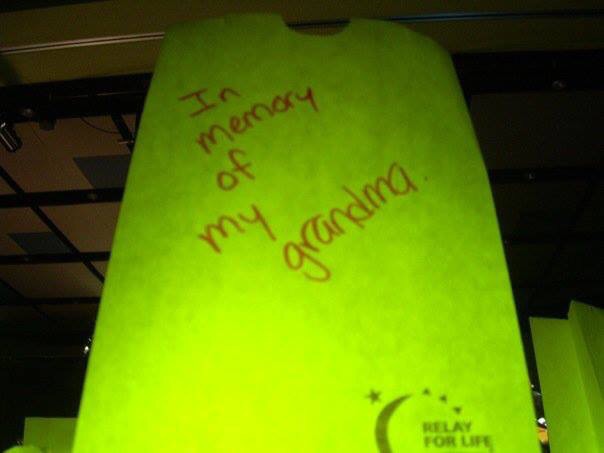
For nearly 30 years, I’ve been a participant, supporter and volunteer with the American Cancer Society. What began as a way to celebrate and remember the life of my grandmother has grown to celebrate, remember and honor far too many other people who have been impacted by cancer. I Relay to help fund hope.
Your support will help fund research, programs, services, information — and it will help fund hope.
Cleveland, the city known for its rock anthem and industrial past, surprised me with its mix of charm and grit. During my first visit in more than 20 years, I tried to explore deeper than the clichés and discovered a city of contradictions. I shared with friends that I tried keeping an open mind.
But… it was difficult.
First off, let’s talk pavement. Cleveland is all about massive highways and concrete jungles, with parking lots that seemingly stretch for miles. It’s like greenery took a backseat to development. First Energy Stadium, where the Browns play, has what looks like six football fields of parking right along the lakeshore. And in the downtown core, flat-surface parking lots are everywhere.
And yeah, gentrification. It’s everywhere, including Cleveland. Revitalization is sometimes necessary, but we always lose the heart and soul of the place in the process. That’s the vibe I got in Ohio City — a neighborhood in the city that looked like it once was a cool place to visit but has since become the meme of the Edison lights, metal high-top barstools and industrial ambiance with $16 basic burgers and fries.
But hey, it wasn’t all gloom and doom in Ohio City.
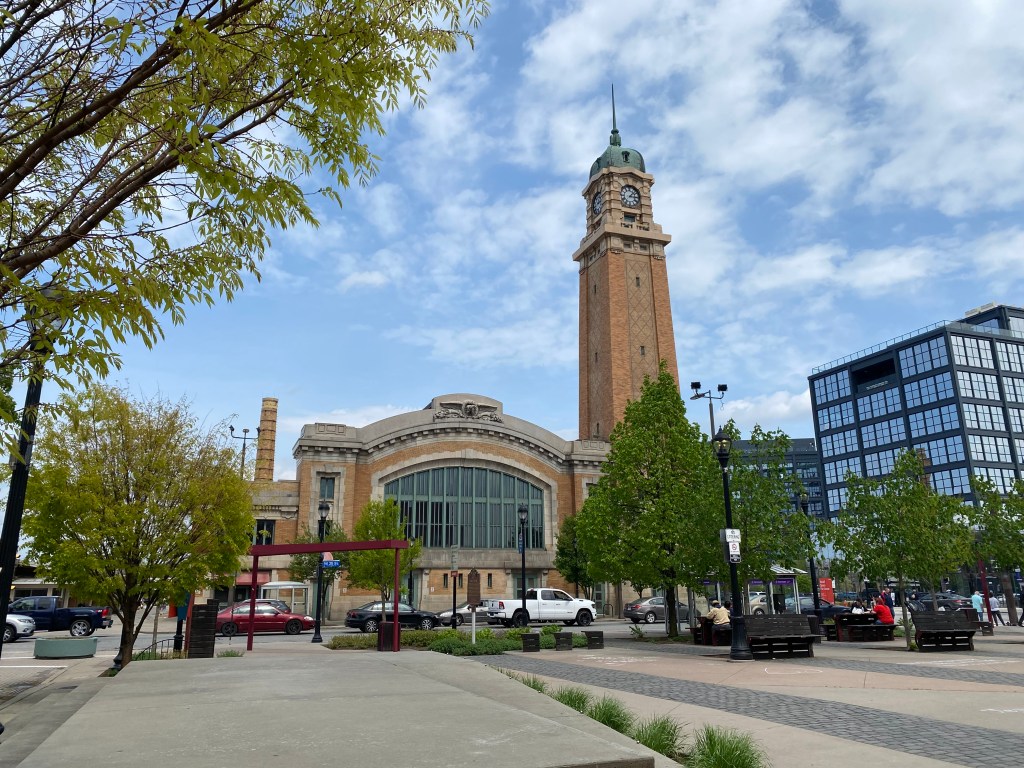
I fell in love with West Side Market in the Ohio City neighborhood. I enjoyed it so much that I went back on my second day before leaving so I could get items to bring back with me.
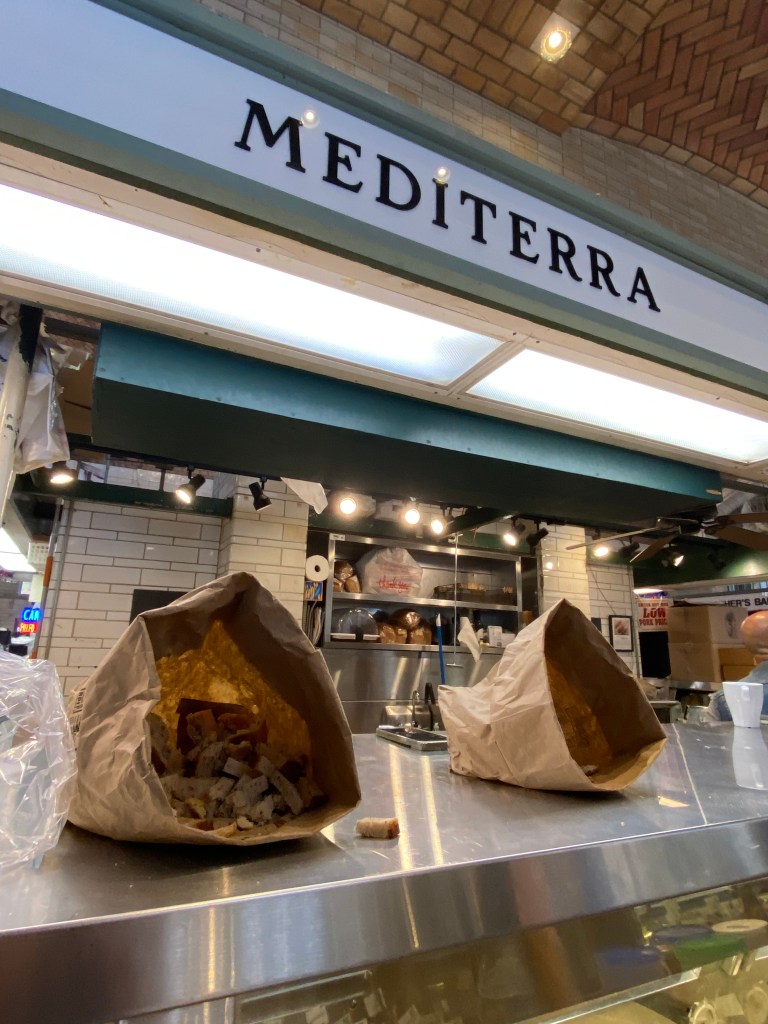
I even found a Pittsburgh-based bread company (Mediterra) and a doughnut/coffee shop (Jack Frost) that used to have an Erie location.
Pittsburgh destroyed its building called the terminal by making it into a suburban strip plaza in the heart of the Strip District (another grossly gentrified neighborhood).
Cleveland redeemed itself with the House from A Christmas Story. Seeing the house was a blast from the past, giving me major nostalgia vibes from the movie. The home is nestled in the Tremont neighborhood.
In keeping with the “A Christmas Story” theme and my fondness for buildings that once served as not only a retail mecca for downtown centers but a gathering place where locals made memories, I walked around the outside of the former Higbee’s in Downtown Cleveland. It’s now JACK Cleveland Casino. The facade remains largely intact, and plaques mark the former department. There are no artifacts acknowledging “A Christmas Story” on the outside, sadly.
Sure, I missed out on some spots like The Arcade, but the 5th Street Arcades across the street offered a nice throwback vibe to when downtowns were the core of retail.
And let’s not forget the quirky sights, like the Free Stamp and the GE Chandelier, which, I learned when building my list of landmarks to see, was installed in 2014. The chandelier hangs from a steel structure that is 44 feet above the intersection of Euclid Avenue and East 14th Street in the city’s Playhouse Square district. (No, I didn’t see it at night. Yes, I will next time I’m there.)
As for the Free Stamp structure (art piece?), this roadside attraction is located in Cleveland’s Willard Park, at the corner of Lakeside Avenue and East Ninth Street. Though it’s near the road toward the Rock & Roll Hall of Fame and Voinovich Bicentennial Park, you might miss it on your way because — despite being considered the world’s largest rubber stamp — it is almost discreetly hidden behind Cleveland City Hall and several trees.
The roadside attractions might be a bit random, but they add that extra dash of personality to this Rust Belt city.
Cleveland’s a bit of a mixed bag for me. I was wowed by Detroit and thought my preconceived notions of Cleveland would have been all for naught. But, in the case of Cleveland, the stereotype rings true. But I’ll be back!
Pittsburgh…are you ready for it? With Taylor Swift’s two “Eras Tour” Pittsburgh shows at Acrisure Stadium (I still call it Heinz Field) approaching (June 16 and June 17!), here is a look at everything you need to know before going — from parking to transportation to bag policies and so much more.
Much of this information has been condensed from the Acrisure Stadium site. Visit that site for more information.
Who is opening for Taylor Swift?
Girl in Red and Gracie Abrams will open for Taylor Swift in Pittsburgh on June 16.
Girl in Red and Owenn will open for Taylor Swift in Pittsburgh on June 17.
When will Taylor Swift start performing?
Based on previous shows, it seems that Taylor Swift will probably take the stage around 8 p.m.
How long does the concert last?
The show begins at 6:30 p.m. Taylor Swift typically features 44 songs, meaning she performs for about three hours, including two secret songs that change each show.
Swiftburgh! From the Carnegie Science Center to Primanti Bros., here are 13 things to do during your June 16-17 weekend in Pittsburgh for Taylor Swift.
Oh, and here is what the stadium likely will look like with the stage.
Arrive early
While the show begins at 6:30 p.m., and Taylor Swift likely goes on around 8, it’s recommended to arrive early. This can ensure you have ample time to pass through security, find your seats, use the restroom, get something to eat and check out the Taylor Swift merch (more on that in a bit).
For Steelers games, the stadium opens two hours before kickoff. This site will be updated once the stadium opening time is known.
What is the Acrisure Stadium bag policy?
Acrisure Stadium enforces a “clear bag policy,” limiting the size of bags to no bigger than 12 inches by six inches by 12 inches. Small clutch purses no larger than 4.5” x 6.5” are also permitted, with or without a handle or strap, and need not be clear. Bags must be made of clear plastic, vinyl or PVC.
Small clutch purses — with a max size of 4.5 inches by 6.5 inches — with or without a handle or strap can be carried into the stadium along with one of the clear bag options.
A 1-gallon reusable storage bag (think: Ziploc) is permitted.
An exception is made for medically necessary items with inspection at the gate. Diapers and wipes are permitted in a clear bag. Diaper bags are not permitted.
Each member of a family, including children, will be able to carry an approved clear bag and a clutch purse.
Among other bags not permitted include: Backpacks, fanny packs, camera bags, computer bags, other types of purses, cinch bags, tote bags and seat cushions.
What can I take into Acrisure Stadium?
In addition to following the bag policy above, guests are able to bring the following items:
Food — of any kind — contained in a clear plastic bag
Factory-sealed plastic bottles of water or soft drinks that are a maximum size of 24 ounces
Still photography cameras with a lens that is 6 inches or less in length not contained in a case
Hand-carried jackets, blankets or other items that will be searched
Leave these items at home or in the car
Any non-clear bag exceeding the bag policy rules
Apparel or signage displaying profane or abusive language
Alcoholic beverages
Balls of any kind, including full-size footballs
Banners/signs on poles
Battery-operated items (i.e. light up clothing)
Cans, coolers of any type, glass bottles or thermoses
Laser pointers
Noisemakers
Selfie Sticks
Single-purpose video cameras or still-photography cameras with a lens longer than 6 inches
Strollers or seat cushions
Weapons/any item that may be deemed to be a projectile
Any other item deemed dangerous or inappropriate
Advertisements
Wheelchair policy
Acrisure Stadium has a limited number of wheelchairs available for use during events. Generally, these can be obtained at the Guest Service Locations located at Stadium Gates and Guests Service 104, located near the FedEx Great Hall. You will be required to deposit your driver’s license in order to use a wheelchair.
Guests looking to store a walker or wheelchair may do so at the Guest Services room closest to their ticketed seat.
Re-entry policy
Exit and re-entry is not permitted at Acrisure Stadium. In the case of a medical emergency, proceed to the Guest Services Kiosk at Gate B.
Stadium Wi-Fi
Guests can access free Wi-Fi by selecting the “Acrisure Stadium Public” option on your device.
Aisle obstruction
Standing or sitting in section aisles is prohibited. Guests may not stand in aisles or obstruct others from viewing the event. Aisles must be kept clear.
Banners/Signs
Banners and signs are permitted but must be in good taste, the stadium says. Management reserves the right to determine what signs are in violation of stadium policy and confiscate signs that are in violation stadium policy.
Signs or banners cannot obstruct another fan’s view and cannot cover any stadium signage. They may not contain commercial messages, logos or political endorsements.
Signs cannot interfere with any messaging placed by the event.
Banners or signs that are attached to poles will not be permitted. Banners are not permitted to be displayed in or outside the “Luxury Suites.”
Buy your merch online
Reports from other Taylor Swift shows indicate that wait times for merch lines can be as high as an hour. Save time, save your frustration and just buy online! Trust me!
Battery-operated items
Battery-operated items such as posters, lights or clothing are not permitted into Acrisure Stadium.
Individual cell phone chargers
According to an April 2023 story in the Beaver County Times, individual cell phone chargers, including a charging block and cord, and external rechargeable battery packs, are permitted in the stadium. Security staff members might ask to inspect the device when entering the stadium.
Cashless
Acrisure Stadium is a cashless facility. An accessible ATM is located inside Gate B. Credit and debit cards are still accepted, as well as Apple and Google Pay.
Comments and concerns
For comments and concerns on event day, text PITT33 to 69050 with your issue and location or call the guest hotline at 412-697-7766. For assistance on non-event days, call 412-697-7150 and press 4.
First Aid
There are five First Aid locations throughout Acrisure Stadium. Medical services are provided before, during, and after each event. In the event of a medical emergency, please notify the nearest stadium personnel.
Umbrellas
Umbrellas can be taken into Acrisure Stadium but are not permitted to be open.
“We Connect”
Guests can register members of their party with Acrisure Stadium team members to assist stadium staff in the event an individual becomes separated from their party.
Registration is available at all four Guest Services rooms: Behind Section 104 in the FedEx Great Hall, Lower Level North behind Section 123, Upper Level East behind Section 504 and Upper Level West behind Section 528.
Transportation to Acrisure Stadium
Sure, you can drive there. But between congestion and parking, good luck. Find details here.
Your best bet is to use public transportation.
Pittsburgh Regional Transit offers multiple bus routes and light rail transit lines near Acrisure Stadium.
Using PRT’s trolley/light rail: All lines (red, blue and silver) service Allegheny Station (closest to the stadium) and North Side Station (near PNC Park).
In addition, you could exit the light rail train at Wood Street Station or Gateway Station and walk across the Andy Warhol, Rachel Carson or Fort Duquesne bridges.
Single ride fare cost is $2.75. So, roundtrip would cost $5.50. Recommend getting a ConnectCard, but trains take exact cash. You can get a ConnectCard at most T stations. More details.
Bus routes near Acrisure Stadium: 14 and 18. Both have stops right outside the stadium. Additional routes within walking distance or with a transfer can be found here.











 BobbyCherry.com