Tag Archives: news

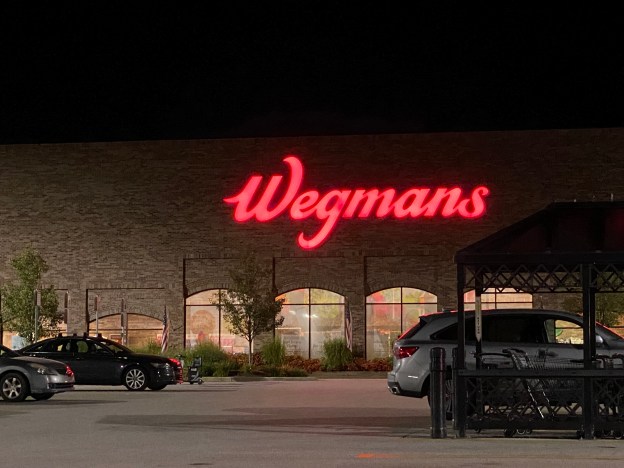
3 Wegmans set to open in 2025. Is a Pittsburgh area store among them?

Wegmans will open three new locations in 2025 — including two stores in new markets.

There was speculation in 2024 that Wegmans could be looking at two different locations in the Pittsburgh area — including Cranberry Township, which is in a northern suburb of Pittsburgh, and possibly a location in South Fayette Township in Allegheny County.

Wegmans fans in the Pittsburgh area will have to wait a big longer because none of the company’s three new stores in 2025 are set to open in Western Pennsylvania.

The Rochester, New York-based grocery store, with its cult-like following, will enter Connecticut with a store in Norwalk.

This 92,000-square-foot store will offer 13 full-service checkouts and 15 self-checkouts.

This store will have a two-story parking garage with 551 parking spaces and a bridge into a mezzanine level of the food market.

An “Interesting fact,” Wegmans notes for this store, is that the parking garage will include solar canopies.

Wegmans will enter Long Island, New York, with a store in Lake Grove in February. The 101,000-square-foot store will have more than 630 parking spots, 14 full-service checkouts and 14 self-checkouts.

And, Wegmans notes, the top of the store’s clock tower will be the highest point in Lake Grove.

The company’s third new store for 2025 is in Rockville, Maryland, where Wegmans will open its ninth store in that market.

This 80,000-square-foot store in the Twinbrook Quarter Community will feature two levels of parking below the store.

The “interesting fact” for this store is more peculiar than interesting: Wegmans shoppers will get 90 minutes of free parking.

Read more about what these three new stores will offer in a news release from Wegmans.

The cult-like following of Wegmans

Wegmans isn’t just a grocery store—it’s an experience.

With its roots in Rochester, New York, the chain has amassed a loyal following that many would describe as cult-like.

Customers rave about the store’s unique ability to make grocery shopping feel like a treat rather than a chore. What makes Wegmans so special?

For starters, it’s the attention to detail.

From the impeccably organized aisles to the high-quality produce, artisanal baked goods and chef-inspired prepared foods, Wegmans takes pride in delivering excellence at every level.

Shoppers know they can rely on Wegmans for items that aren’t just staples but also inspiration—whether it’s the store-made fresh sushi, decadent desserts or its impressive international food selection.

But what really sets Wegmans apart is its customer service.

Employees are trained to be helpful and approachable, creating an atmosphere where customers feel valued.

Many Wegmans fans describe the store as a place that goes beyond transactions—it feels like a community.

Over the years, the grocery chain has become a destination in and of itself, drawing road-trippers and loyalists willing to drive hours just to shop there (I am among them!).

The store even inspires online fan groups and countless social media posts, where customers swap tips, share their favorite finds and celebrate new store openings with a fervor usually reserved for concerts or theme parks.

Wegmaniacs: The passionate fans driving the Wegmans phenomenon

To truly understand Wegmans’ success, you need to know about the “Wegmaniacs.”

This nickname, affectionately given to the grocery chain’s most devoted fans, perfectly captures the enthusiasm—and sometimes obsession—that Wegmans inspires.

The term originated organically, coined by shoppers themselves and embraced in fan groups, online forums and even news coverage.

So, what makes a Wegmaniac?

It’s someone who goes out of their way to shop at Wegmans, whether that means driving hours to the nearest store or marking their calendar for the grand opening of a new location.

For Wegmaniacs, Wegmans is more than a grocery store—it’s a lifestyle.

They rave about the chain’s prepared foods (those subs and sushi!), the high-quality store-brand items and the welcoming shopping experience.

This devotion goes beyond the aisles, too.

Wegmaniacs are known to swap tips about the best seasonal products, track down rare Wegmans finds, and even create ranking lists of their favorite items, from frozen meals to bakery treats.

Social media is alive with posts celebrating Wegmans’ legendary customer service, beautifully curated displays and even its holiday offerings.

For some Wegmaniacs, the brand is a family tradition, passed down through generations of shoppers who have grown up with Wegmans as a staple in their lives.

Others are newer converts, discovering the magic after the chain’s steady expansion into new markets.

Whatever their origin story, one thing is clear: Wegmaniacs don’t just shop—they evangelize.

As a proud Wegmaniac myself, I can confidently say there’s no grocery store quite like it. Two-hour drives to grocery shop at Wegmans became a regular part of my life once I discovered Wegmans.

And as Wegmans prepares to open three new stores in 2025, including two in cities new to the brand, I can only imagine how many more Wegmaniacs will soon be joining the ranks.

After all, once you experience Wegmans, there’s no going back.

Defying gravity or dragging along? My take on the ‘Wicked’ movie

Seeing the “Wicked” movie on a “pre-screening” night marked a significant step in my ongoing quest to understand this beloved story.

As someone who treasures “The Wizard of Oz,” I’ve always struggled with the narrative of “Wicked.”

While I’ve never seen the stage show live, I’ve read the book and watched a couple of bootleg videos of the Broadway production.

Each time, I found myself lost in the sprawling first act, overwhelmed by how much “Wicked” tries to pack into its story.

The movie helped bring some clarity.

Finally, I could better grasp the narrative threads tying Elphaba’s and Glinda’s journeys together.

The film’s visual grandeur and talented cast certainly helped.

Cynthia Erivo’s Elphaba is magnificent, capturing both vulnerability and power, while Jonathan Bailey’s Fiyero shines with charm and intrigue.

Ariana Grande, as Glinda, perfectly embodies the character’s bubbly exterior and hidden depth.

Adding to the film’s nostalgic appeal, original Broadway stars Idina Menzel and Kristin Chenoweth make brief appearances in the movie.

While their roles are small, their presence is a touching nod to fans of the stage show who have cherished their iconic portrayals of Elphaba and Glinda.

Seeing them included felt like a heartfelt acknowledgment of the legacy they created and a passing of the torch of sorts to Erivo and Grande, who now carry the story forward for a new generation of “Wicked” enthusiasts.

Despite its strengths, the movie’s pacing remains an issue.

At 2 hours and 40 minutes, “Wicked: Part One” (which is what this should be called in marketing efforts of the film) is longer than the entire Broadway production (2 hours and 30 minutes not counting the intermission), yet it tells only half the story.

This choice feels excessive, as the first part of the film drags in places, making me question why the story needed to be split into two movies.

One aspect where the movie excels is capturing the emotional core of “Wicked.”

At its heart, the story explores themes of friendship, identity and finding one’s voice in a world that silences those who are different.

This resonates deeply in today’s society, where marginalized groups often fight to be heard and valued.

The plight of the animals in “Wicked”—stripped of their ability to speak and ostracized by society—mirrors the experiences of those who face systemic oppression.

The story challenges viewers to question their complicity and consider the changes needed to create a more equitable world, especially for those whose struggles are too often ignored by the privileged.

That said, my longstanding issues with “Wicked” remain.

While many view it as enriching and expanding “The Wizard of Oz,” I’ve always felt it tries to undo the original’s magic.

The backstory for iconic characters like the Tin Man and Scarecrow feels forced, as though it diminishes the wonder of “The Wizard of Oz” rather than complementing it.

Ultimately, my journey with “Wicked” continues.

The movie offered a deeper understanding of the story but didn’t fully resolve my ambivalence.

Perhaps “Wicked: Part Two” will hold the answers—or perhaps “Wicked” is simply a story I’ll always admire from a distance, even if it doesn’t fully click for me.

America is not safe for LGBTQ people

Despite advancements in LGBTQ inclusion, many still lack safety at home. By the end of 2023, 75 of 500 anti-LGBTQ bills nationwide became law, coinciding with a five-year high in hate crimes against LGBTQ individuals in 2022.

Here are some key highlights of SafeHome.org’s third annual state safety ranking, which uses legislative analysis and FBI hate crime data:

  • Rhode Island, New Hampshire, and Delaware earned A+ grades for their strong pro-equality laws and low hate crime rates.
  • South Dakota, Florida and Wyoming received F grades due to high discriminatory laws and hate crimes. Florida, notably, fell from the 15th-lowest safety score last year to one of the worst.
  • Nearly 50% of states passed new anti-LGBTQ legislation in 2023.
  • Hate crimes against LGBTQ people rose 10% between 2021 and 2022, with a 40% increase against transgender individuals.
  • While 59% of LGBTQ people feel safer due to state laws, 89% believe federal action is necessary for full protection.

The ranking, based on the opinions of 1,000 LGBTQ Americans and information from the Human Rights Campaign, considers parenting freedoms, criminal justice rights, non-discrimination rights, youth protections, and health laws, alongside FBI-reported hate crime frequencies.

Top safe states

  1. Rhode Island: Highest safety grade due to comprehensive protections and low hate crime incidence.
  2. New Hampshire: Low hate crime rates and strong equality protections.
  3. Delaware: Early legalization of same-sex marriage and extensive LGBTQ protections.
  4. Alaska: Elected openly LGBTQ legislator and proposed anti-discrimination bills.
  5. Hawaii: Strong legacy of LGBTQ friendliness and inclusive laws.

Worst states

  1. South Dakota: High rate of hate crimes and many anti-equality laws.
  2. Florida: Drastic decline due to harsh new laws like “Don’t Say Gay.”
  3. Wyoming: Few pro-equality laws and high hate crime rates.
  4. Ohio: High hate crimes and recent “Don’t Say Gay” law.
  5. Alabama: Poor legal environment with many anti-equality laws.

Everything in life is only for now

I’m not the first, and I won’t be the last.

The end of 2022 will mark a first in my professional career: I will no longer be a full-time journalist.

That’s not an easy sentence to complete and an even more difficult one to process. Journalism has been the only career I’ve ever envisioned.

When fellow elementary school students dreamed of being astronauts or gymnasts or doctors or presidents, I wanted to be a reporter.

In middle school and high school, as sciences and math were increasingly pushed, I pushed back and focused on writing, journalism and communications courses.

This sounds cliche, but I was first drawn to news for its ability to share important information people needed to know.

Newspapers, at the time, were stuffed full of so much valuable information.

I would lose track of time reading the Sunday edition of the Pittsburgh Post-Gazette — back when it seemed thicker than an encyclopedia. And I always found myself focused on local and regional stories — stories that had an impact or were of interest to areas I lived in or near.

I read the then-Moon Record from front to back — a newspaper that’s related publications would later have a profound impact on my career and life.

I was also drawn to news for its sense of immediacy and that rush of adrenaline when breaking news happens, watching television reporters and anchors bring information to people in real time.

While news stories were of interest to me, so was understanding the art of making news — whether it be for print, television, radio or, later, digital.

To this day, I consume the information while also analyzing the coverage. Ask anybody who has ever watched a newscast with me, and they’ll tell you how enjoyable (my word, not theirs) it is to hear me discuss the coverage.

As a kid, I can remember many times writing “stories” about and anchoring “newscasts” to my stuffed animals. I would even make “incidents” happen in my Micro Machines setups to have newspeople go cover.

Outside of interviewing toys, my first major interview was then-Pittsburgh Steelers kicker Gary Anderson, who I tracked down in an elementary school office following an assembly. I was in third grade.

In high school, my principal threatened to keep me from walking at graduation following the publication of an editorial I wrote that he disagreed with.

As a journalist in college, I helped tackle a groundbreaking legal case of a college nun who sued a Catholic university over sexual discrimination. I helped to uncover sources that were quoted by The New York Times.

My time at the Pittsburgh Tribune-Review allowed me to live out those childhood dreams of sharing stories that mattered to communities and families through the Sewickley Herald and The Signal Item — two newspapers I will forever be grateful to have been part of.

For the last few years with Hearst Television, I have had the responsibility of managing a team tasked with copy editing news and media content across more than two dozen local news digital platforms.

And while it is incredibly difficult to step away from what has long felt like a calling, it was time.

The coronavirus pandemic has allowed me to refocus my life and do something I’ve never done before: Put myself and my life first.

It’s not been easy to say goodbye to working full-time in news. There have been a lot of tears shed.

But I’m reminded of a line in one of my favorite musicals — “Avenue Q” — that is simple and true, and helped me to again understand that nothing is forever: “Everything in life is only for now.”

Why journalists should build personal brands, and why those who disagree also are correct

Get ready for a tailspin of a ride regarding the personal “branding” of journalists.

The Internet — more specifically, Facebook — has been abuzz with reporters and television folks, freelancers, photographers and bloggers all creating their own Facebook pages after the social media-focused company created its Facebook + Journalists network.

It wasn’t until Facebook began connecting reporters across the globe that I realized branding is important on a personal level. We have no idea where our industry is headed, and for those of us employed by news companies, we never know what tomorrow brings. So we work and do our job and hope that we’re able to come in the next morning and pick up where we left off the night before.

This past week, for instance, we saw Gannett announce layoffs of some 700 employees companywide and implement mandatory 15-day furloughs for executives whose salary figures are above a certain number. We see newspapers closing, television newsrooms shrinking and more bloggers willing to work for free to produce work even a middle school journalism enthusiast would do a better job covering.

But it’s all part of an industry in a never-ending fluctuation.

So what’s a journalist to do? Market themselves.

We learn at a very young age to market ourself in a way that makes us stand out among the crowd. Resumes and cover letters are supposed to make hiring managers and editors stop in their tracks as a potential job seeker highlights his previous experience.

It’s not about embellishing, but rather, about the ability to showcase your skills in a manner that proves you’re capable of the challenges that could be ahead.

So when I created my Facebook + Journalist page, I took into consideration not just my reporting ability, but other media-focused things I’m interested in. I also considered my human interest side.

The outcome is a brand that showcases my reporting skills, writing abilities, volunteer work and a softer side that includes my passion for a certain long-running television series and my love of all things Pittsburgh.

The page isn’t branded as “Bobby Cherry — Trib Total Media,” but rather as “Bobby Cherry, a reporter with many skills and interests.” That’s not to say readers haven’t “liked” the page. A few have, and I want more to as well. I want them to be able to interact with me and get to know me in a capacity that doesn’t say, “Yo man, let’s go drink,” but instead says, “I’m your local reporter. Tell me what’s happening.”

We are in a different world now than 10, 20, 30 years ago. While I can’t speak first-hand about what reporting was like before cable TV and the Internet, I am led to believe that, at the bottom of it all, journalism hasn’t changed over time. The way in which news is consumed has changed, though.

So when I read things that question why journalists are branding themselves, I can’t help but wonder how those folks think people will receive the news in 20 years.

Take, for instance, Gene Weingarten’s column in Thursday’s Washington Post, whose column was written to a graduate student asking how he has branded himself over the length of his career. He replied by saying that branding is ruining journalism.

These are financially troubled times for our profession, Leslie — times that test our character — and it is disheartening to learn that journalism schools are responding to this challenge by urging their students to market themselves like Cheez Doodles. — Gene Weingarten

While I wish Mr. Weingarten would have spoken more about how branding is ruining journalism (I’d enjoy hearing more about his thoughts), I did agree with his comments on how newspaper companies think user-generated content is necessary.

Newspapers that used to allocate their resources to deposing dictators and ferreting out corruption are now using them to publish snapshots of their readers’ cats. This trend is called “user generated content,” or UGC. (Yes, in the new lexicon, “readers” have somehow become “users,” as though, in an effort to habituate people to our product, we’re lacing it with crack. Which we are, sort of. Pandering, and getting pandered to, can be addictive, and it is bad for you.) …

Newspapers used to give readers what we thought they needed. Now, in desperation, we give readers what we think they want. And what we seem to think they want is happy, glitzy, ditzy stuff, which is why in recent years newspapers across the country have been replacing sections named, say, “Viewpoint” with online Web destinations named, say, “Wheee!” featuring multiplatform, user-interactive content-sharing with clickable portals to “Lolcats.” — Gene Weingarten

He’s right. News companies have focused more on poking the reader for their thoughts and less on making the reader the audience. The readers do everything except sit in the newsroom with us. Every story seems to end by saying, “What do you think about the sky being blue? We want to hear from you!”

There’s nothing wrong with asking readers for feedback. In many ways, newspapers ALWAYS have relied on reader content — news tips, submitted photos, letters to the editor, community briefs, school accolades. But we’re at a point where we seem to want user content more than our own, unique content.

So I understand why Mr. Weingarten seems frustrated.

But I don’t understand his correlation between a personal brand and implementing more reader content.

Whether in a formal or informal way, newspapers always have branded themselves as the town’s focal point for news, views and information. So it comes as no surprise that now, as newspapers struggle to survive financially and struggle to compete with other venues, reporters are creating personal brands.

I want people to read my content. I want them to see what’s happening in their town. Journalism always has been about marketing one’s self. If we write a story and tell nobody about it, then what the hell was the purpose of writing it?

We’ve got to make a name for ourself, and for our newspaper. If a reader enjoys what I’m writing, they’re (hopefully) more likely to see what other stories and work our newspaper features.

Where I struggle to support a reporter’s personal branding is when the individual wants to share information and photos of their cat or their grocery cart filled with food. I’ve found many reporter Facebook pages that are filled with more content showcasing the individual at charity events or outside of the news world, rather than content relating to news.

While readers might be interested in seeing photos of our animals, I question the professionalism of such information. If you’re writing a column about a trip to a dog park and you add a photo of your pup, that’s one thing. But when you’ve uploaded a photo of your dog sleeping with a caption that says, “Rover is tired,” I really have to question it.

It’s about giving the reader what they don’t know they need.

And in today’s world where a century old newspaper is competing with a blog created yesterday, we — the reporters of the world — need to prove to people why our work, backed by intelligent editors who are passionate about journalism, can offer better content than a fly-by-night blogger.

So if that means branding my work and letting potential readers get to know me on a level beyond my byline, I’m OK with it.