Pride was born from resistance. That fight is far from over.

I was reminded Saturday that Pride isn’t just a party.

Pride is a reminder — of progress made and of the work that’s still very much unfinished.

While at the Pride event in Erie, Pennsylvania, I noticed that at least two boats at a marina next door had flags emblazoned with, “Trump won.”

Those flags and the meaning behind them are not patriotism.

Those flags are not about humanity.

Those flags aren’t about peace or love.

Those flags do stand for harm and hurt.

Those flags do represent evil.

While at the Pride event, I saw kindness abound.

I saw people sharing positive exchanges with strangers.

I saw people supporting their LGBTQ kids, family members, friends, colleagues.

I saw people who just want to exist without threats from Republicans.

I saw people who just want to exist without being told they don’t belong.

I saw people who just want to exist without their life being considered political.

I saw people who just want to stay alive.

Republicans have made it very clear: their agenda includes harming LGBTQ people as much as possible.

Republicans are rolling back LGBTQ protections at every level.

Especially for trans youths.

That’s not hyperbole.

And it’s not just happening with Republicans in Washington.

It’s happening on school boards, municipal governments, county councils.

These aren’t isolated incidents.

They’re coordinated.

Republicans are moving in sync, with direct marching orders — from small towns to Washington.

And LGBTQ people are paying the price.

Look around.

Book bans.

Drag bans.

Theater performances canceled.

Health care access targeted.

Businesses harassed.

Education cut.

Historical records erased.

Pride flags debated like they’re threats.

This isn’t about “just politics.”

This is about people’s lives.

And too many people are shrugging it off like it’s just more noise.

Supporting a party that’s actively working to harm LGBTQ people — at any level — isn’t neutral.

It’s not “just about the economy” or “just local.”

Republicans are connected to a broader playbook.

One that’s strategic, aggressive and deeply harmful.

The people doing harm are loud.

The rest of us need to stop being so quiet.

Not saying anything? That helps them.

Voting for the “nice” Republican on your school board? That helps them.

Supporting their businesses (Yes, even Chick-fil-A)? That helps them.

Acting like these issues are too complicated to speak on? That helps them, too.

What’s happening now is serious.

And if it doesn’t make you uncomfortable, it should.

Hourglass / Image by Eduin Escobar from Pixabay

From Drake Hogestyn to John Black: End of an icon on ‘Days of our Lives’

John Black’s death on “Days of our Lives” hit hard—not just because we lost a fictional hero but because of what it meant for the people who knew and loved Drake Hogestyn.

For nearly 40 years, John Black saved lives, beat the odds and always came home to Marlena. But his final act of heroism—saving Bo—was one he wouldn’t survive.

John Black was the heartbeat of Salem—the other half of one of daytime’s most iconic couples, and a dependable constant through the wildest soap storylines imaginable. Watching him take his final breath wasn’t just painful—it felt personal.

The way he died was classic John Black: Heroic, self-sacrificing and driven by love for family.

He fought to get the medicine Bo needed, making it back from another secret mission just in time to help Steve and Shawn bypass the lab’s security system. That final act was pure John Black—saving a friend no matter the cost.

Bo lives because of John Black, and in a way, that legacy is fitting. John always put others first. But knowing that his final moments were—in some manner—also a goodbye from Drake Hogestyn makes it even harder to watch.

Drake Hogestyn last appeared on the show in September and died a few weeks later following a diagnosis of pancreatic cancer, which he kept away from the public spotlight. “Days of our Lives” films about eight months ahead, so, at the time, Hogestyn was leaving the show for medical reasons, likely planning to return.

He approved the storyline of John Black’s death, and that’s what makes this even more gut-wrenching.

Eric Martsolf, who plays John Black’s son Brady Black, said filming the funeral scenes didn’t feel real.

“It felt very unnatural to film a funeral of a character and a man who you knew was still with us,” Martsolf said in an interview.

By all accounts, Drake Hogestyn was a mentor, a father figure, a steady force behind the show.

I don’t think we’ll ever see a character like John Black again. He and Marlena were the gold standard for soap supercouples. Their love survived death, amnesia, possession and plot twists that defied logic—and it still felt grounded.

We didn’t just say goodbye to a character. We said goodbye to a legacy.

‘Small Town Setup’ misses mark by forcing real women into Hallmark movie tropes

Hallmark Channel’s “Small Town Setup” wants to be the real-life version of its most beloved movie plot: Big-city woman returns to her quaint hometown, realizes she’s missing love and finds it — handpicked by her parents and neighbors. But what plays like a romantic fantasy in a movie script feels far more intrusive and problematic in reality.

The show, which airs only on Hallmark’s streaming service, is a cringeworthy framework that’s rooted in dated gender roles and small-town idealism masquerading as universal truth.

Here’s the premise, straight from Hallmark: “An unsuspecting city dwelling single returns home to visit their small town parents, and is met with three potential dates. These suitors have been carefully selected by their parents and community, hopeful they will find love.”

Translation: You’re single, so your life must be missing something — and your family, neighbors and a Hallmark+ crew are here to fix that for you.

In the first episode, Victoria — a successful businesswoman living in New York City — visits her small hometown. She’s met with the suggestion that her single status is a problem, not a choice. Her parents, in coordination with dozens of people from the town, have curated three men she might date. That’s not matchmaking — that’s social engineering.

The process? The town nominates men. The parents narrow the field to three. Victoria then goes on dates while 80 or so townspeople observe and vote. It’s part community fair, part bachelor auction.

Her first date brings lemonade to a lakefront chair setup. She tells him she’s open to moving back “for the right person.” Cue the stereotype: That love is best found by leaving your independent city life behind and retreating into simpler, slower surroundings.

The other two dates — one at a mini-golf course, one at a crepe restaurant — are awkward. The conversations feel off, as if Victoria is performing openness while being trapped in a format that doesn’t leave much room for agency. She asks both men about their five-year plans, but we never hear hers.

At the end, Victoria has to choose. But before she does, Ashley Williams (the host) announces who the townspeople voted for. Then we hear who the parents picked. Only then does Victoria get to make her decision — in front of everyone.

She picks Michael, the first guy. They smile for the camera. And then the show just… ends.

The second episode starts the same way — a New York City woman heads home while her family searches for “Mr. Right.” I turned it off within minutes.

There’s nothing wrong with valuing relationships or even believing in the magic of small towns. But “Small Town Setup” doesn’t offer a heartwarming story — it offers a narrow view of what happiness looks like, and it reinforces tired tropes that women need saving and success isn’t enough without romance.

From Buzz to WALL-E: My personal Pixar movie-watching challenge

Like most Millennials I know, I love Pixar movies.

They’ve been a constant source of joy, inspiration and, yes, buckets of tears over the years.

There’s just something about the way Pixar captures emotions — the quiet beauty of relationships, the ache of loss, the thrill of adventure — that gets me every time.

Pixar movies don’t just tell stories; they make you feel them deep in your heart.

Take “Inside Out,” for example.

It’s a masterclass in emotional storytelling.

By personifying Joy, Sadness, Anger, Fear and Disgust, Pixar doesn’t just explain emotions; it validates them.

Watching Riley navigate the complexities of growing up while learning to embrace all her feelings — not just the happy ones — is such a poignant reminder of the importance of emotional balance.

It’s impossible not to cry when Joy and Sadness work together to help Riley reconnect with her family.

Then there’s “Up,” a movie that delivers one of the most heart-wrenching love stories ever told in just its first ten minutes.

The montage of Carl and Ellie’s life together is a bittersweet testament to love, loss and the enduring power of memory.

By the time Carl ties those balloons to his house and sets off on his adventure, you’re already so emotionally invested that the rest of the movie feels like a healing journey.

And then there’s “Finding Nemo.”

It’s not just a thrilling underwater adventure; it’s also a deeply emotional tale of love and the struggle to let go.

Marlin’s fear and overprotectiveness resonate with anyone who’s ever loved someone so much it hurts, and his journey to trust Nemo’s capabilities is as inspiring as it is touching.

Pixar has an uncanny ability to tackle complex themes in ways that feel accessible and authentic.

Whether it’s the existential questions raised in “Soul” or the celebration of family and legacy in “Coco,” these films have a way of making you think about life and relationships in new and meaningful ways.

Even “The Good Dinosaur,” often overlooked in the Pixar lineup, captures the raw emotion of fear, courage and finding your place in the world.

And let’s talk about “Toy Story 3.” That movie absolutely destroyed me (in the best way). The scene where Andy hands over his toys to Bonnie is one of the most poignant goodbyes ever put to screen.

It’s not just about saying farewell to childhood; it’s about embracing change and finding joy in new beginnings.

Pixar understands that life’s most meaningful moments are often bittersweet, and they’re not afraid to show it.

(And do not even talk to me about the conveyor belt scene!)

This love for Pixar movies hit me even harder after visiting “The Science Behind Pixar” exhibit at the Carnegie Science Center.

Seeing how much thought, effort and creativity goes into every tiny detail of these films blew me away.

From animating lifelike movements to designing entire worlds from scratch, it’s clear that every frame of a Pixar movie is crafted with so much care and love. It’s no wonder their movies resonate so deeply.

Walking through the exhibit, interacting with the displays and geeking out over photo ops with Buzz Lightyear, Sulley and Dory reminded me just how special Pixar is.

It reignited my passion for their storytelling and gave me an itch to revisit every single one of their films.

So, I decided to do just that. Over the next few months, I’m embarking on a journey to watch all the Pixar movies in series order, while also grouping them thematically.

It’s going to be a beautiful nostalgia trip.

Here’s my Pixar rewatch schedule:


Week 1: January 6–12

Theme: Pixar Beginnings

  1. Toy Story (1995)
  2. A Bug’s Life (1998)
  3. Toy Story 2 (1999)

Week 2: January 13–19

Theme: Monsters and Friends
4. Monsters Inc. (2001)
5. Monsters University (2013)
6. Finding Nemo (2003)

Week 3: January 20–26

Theme: Family Adventures
7. Finding Dory (2016)
8. The Incredibles (2004)
9. Incredibles 2 (2018)

Week 4: January 27–February 2

Theme: Racing and Resilience
10. Cars (2006)
11. Cars 2 (2011)
12. Cars 3 (2017)

Week 5: February 3–9

Theme: Creativity and Self-Discovery
13. Ratatouille (2007)
14. Brave (2012)
15. Onward (2020)

Week 6: February 10–16

Theme: Emotional Journeys
16. Inside Out (2015)
17. Soul (2020)
18. Elemental (2023)

Week 7: February 17–23

Theme: Space and Sci-Fi Adventures
19. WALL-E (2008)
20. Lightyear (2022)

Week 8: February 24–March 1

Theme: Cultural Celebrations
21. Coco (2017)
22. Luca (2021)

Week 9: March 2–8

Theme: Toy Story Finale
23. Toy Story 3 (2010)
24. Toy Story 4 (2019)

Week 10: March 9–15

Theme: Wrapping Up Pixar
25. The Good Dinosaur (2015)
26. Turning Red (2022)


This schedule lets me relive Pixar’s magic in an organized, intentional way. From the beginnings of Woody and Buzz’s friendship to the emotional depth of “Soul” and “Inside Out,” I’m excited to experience these stories all over again.

If you’re a Pixar fan too, I can’t recommend “The Science Behind Pixar” exhibit at the Carnegie Science Center enough. Read more about the exhibit, which closes Jan. 26, here.

It’s the perfect way to dive deeper into the art and science behind these beloved films and to fall even more in love with the characters and stories we’ve cherished for decades.

The Science Behind Pixar: A journey into animation at Carnegie Science Center

If you’ve ever wondered how Pixar creates its iconic animated films, the answers await you at “The Science Behind Pixar,” an immersive exhibit at the Carnegie Science Center.

After experiencing this immersive, hands-on journey myself, I can confidently say this exhibit is a must-see for fans of animation, science and storytelling alike.

Opened in May 2024 and extended through Jan. 26, the two-story, 12,000-square-foot exhibition transforms the PPG Science Pavilion into “PIXARburgh,” drawing visitors of all ages to dive into the fascinating intersection of science, technology, engineering and math (STEM) that fuels Pixar’s creative magic.

A behind-the-scenes look at Pixar’s movie-making process

From the moment you step into “The Science Behind Pixar,” you’re invited to explore the complex world of animation.

The exhibit features more than 50 hands-on activities that break down the intricate steps Pixar takes to bring beloved films like “Toy Story,” “Monsters Inc.” and “Finding Nemo” to life.

At various interactive stations, you can:

  • Design a robot friend for WALL-E by using magnetic body parts to experiment with how minor changes can impact storytelling.
  • Adjust lighting on a set from “Up” to see how color and brightness can create entirely different moods.
  • Control cameras on a large recreation of a set from “A Bug’s Life” to understand how perspective shapes the storytelling process.

These experiences provide a deeper appreciation for the technological brilliance and artistic creativity that go into Pixar’s films.

Selfies with your Pixar pals

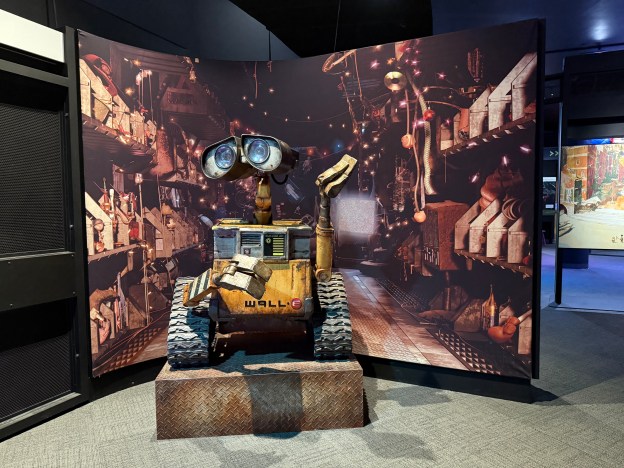
The exhibit also delivers unforgettable photo moments with life-size recreations of fan-favorite characters. Snap selfies with Buzz Lightyear, Sulley, Mike, Dory, Nemo and WALL-E. These vibrant displays are perfect for Pixar fans of all ages and make for incredible keepsakes.


STEM meets storytelling

Pixar’s magic lies in its ability to merge science and creativity, and this exhibit captures that fusion perfectly.

“As Pittsburgh’s most-visited museum, the Science Center strives to connect visitors of all ages with science that ignites curiosity that endures for a lifetime,” Carnegie Science Center Director Jason Brown said in a news release.

Why you should go

Whether you’re a long-time Pixar fan, a STEM enthusiast or simply curious about how animated movies are made, “The Science Behind Pixar” offers something for everyone. It’s an eye-opening, hands-on exploration of the meticulous processes behind the films that have touched our hearts for decades.

Its run was extended for a few more weeks! Don’t miss your chance to explore this one-of-a-kind exhibit before it closes on Jan. 26.