Tag Archives: travel

‘Small Town Setup’ misses mark by forcing real women into Hallmark movie tropes

Hallmark Channel’s “Small Town Setup” wants to be the real-life version of its most beloved movie plot: Big-city woman returns to her quaint hometown, realizes she’s missing love and finds it — handpicked by her parents and neighbors. But what plays like a romantic fantasy in a movie script feels far more intrusive and problematic in reality.

The show, which airs only on Hallmark’s streaming service, is a cringeworthy framework that’s rooted in dated gender roles and small-town idealism masquerading as universal truth.

Here’s the premise, straight from Hallmark: “An unsuspecting city dwelling single returns home to visit their small town parents, and is met with three potential dates. These suitors have been carefully selected by their parents and community, hopeful they will find love.”

Translation: You’re single, so your life must be missing something — and your family, neighbors and a Hallmark+ crew are here to fix that for you.

In the first episode, Victoria — a successful businesswoman living in New York City — visits her small hometown. She’s met with the suggestion that her single status is a problem, not a choice. Her parents, in coordination with dozens of people from the town, have curated three men she might date. That’s not matchmaking — that’s social engineering.

The process? The town nominates men. The parents narrow the field to three. Victoria then goes on dates while 80 or so townspeople observe and vote. It’s part community fair, part bachelor auction.

Her first date brings lemonade to a lakefront chair setup. She tells him she’s open to moving back “for the right person.” Cue the stereotype: That love is best found by leaving your independent city life behind and retreating into simpler, slower surroundings.

The other two dates — one at a mini-golf course, one at a crepe restaurant — are awkward. The conversations feel off, as if Victoria is performing openness while being trapped in a format that doesn’t leave much room for agency. She asks both men about their five-year plans, but we never hear hers.

At the end, Victoria has to choose. But before she does, Ashley Williams (the host) announces who the townspeople voted for. Then we hear who the parents picked. Only then does Victoria get to make her decision — in front of everyone.

She picks Michael, the first guy. They smile for the camera. And then the show just… ends.

The second episode starts the same way — a New York City woman heads home while her family searches for “Mr. Right.” I turned it off within minutes.

There’s nothing wrong with valuing relationships or even believing in the magic of small towns. But “Small Town Setup” doesn’t offer a heartwarming story — it offers a narrow view of what happiness looks like, and it reinforces tired tropes that women need saving and success isn’t enough without romance.
I stayed at a hotel during COVID-19 and …

Navigating life in a global pandemic isn’t easy — we all know that.

After spending a week in Erie dog and house sitting for friends, I wasn’t quite ready to head back to my house, where I — like many other people in their own homes — have been cooped up nearly 24/7 since mid-March.

So I opted for my favorite Erie hotel: the Sheraton Bayfront.

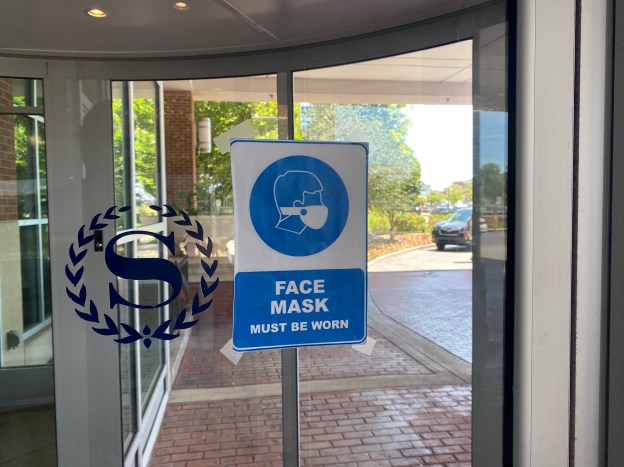
Upon arriving, I noted face mask signs on the revolving door, social distance markers on the floor, plastic glass at the check-in desks and at least two hand sanitizer stations in the lobby.

But what stuck out was the lack of guests moving about without wearing masks. These people were not social distancing and were lingering for far too long — especially as the lobby, restaurant and bar were not set up as the spaces typically are.

I scurried to the elevator after checking in. I wanted to use the Marriott Bonvoy mobile key instead of having to stand in the lobby, but the app was being problematic and required me to see the front desk.

So, once at the elevator, I realized I was given a room on the second floor (I’ve only ever had higher floors). I would soon understand that this was a great thing.

I made sure to be the only person going up. But once I exited, I noticed a set of doors that were closed, meaning guests had to touch the door. And in the few seconds I was there, several people came and went through those doors.

But on the other side of the doors was the door to my room. And the main doors were separating guest rooms from conference space, which meant I had access to the main staircase, which meant I did not need the elevator again. Win!

Inside my room, I wiped down high-touch surfaces with disinfectant wipes that I brought. The room was not much of an issue for me — especially after doing a lot of reading in the days leading up to my stay about the spread of COVID-19 in hotel rooms and through air systems.

I did have to go back downstairs two separate times — once to retrieve items from my car and another to get my Grubhub order.

Both times, there were more people without masks than with them walking through the lobby and outside. That made me quite uncomfortable as any one of these people could be infected with or without knowing.

We’ve learned more about how masks are incredibly important to help prevent the spread of COVID-19.

One of my biggest issues was the cost of the room. With the pool and fitness center closed and the hotel decreasing some of its other services, I paid what I normally would pay for a room. And all I got for it was heightened anxiety while in communal spaces — and I had to disinfect high-touch surfaces on my own to make sure it was properly done.

Will I stay in a hotel again during COVID-19? Probably, but certainly with increased precautions.

Some mostly common sense tips to helping to protect yourself while staying in a hotel:

  • Wear a mask. It’s the least you can do to help protect the hotel workers and other guests. Wear your mask outside of the hotel as well as inside, and keep it on until you enter your room.
  • Bring your own disinfectant wipes and hand sanitizer. Seems obvious, but it’s easy to leave them in your vehicle. You’ll want them on you so you can easily disinfect surfaces and clean your hands as soon as you get into your room.
  • Limit your time in the lobby. Right now, hotel lobbies aren’t for lounging or getting work done near the fireplace or gorgeous view. Do that in your room. Treat the lobby like an airport concourse — just keep moving.
  • Use mobile check-in and a mobile key if offered. This can help limit your time in the lobby waiting to check in. I am particular to Marriott Bonvoy, and try to only stay at Marriott properties (this includes Sheraton brands now, too) when possible. Their mobile key is great when it works correctly.
  • Pack light. If you don’t need all of your clothing and items in the hotel room with you, consider leaving them in your vehicle or at home. This will help you keep account of what you have and also help for the next bullet point.
  • Find the stairs. If you’re able to walk a few flights of steps, it might be the better option. This is not only to help protect you, but we all know what elevator delays in a hotel can be like — especially around check-out time. Packing light can make it easier to use the steps.
  • Limit your time outside of your room. Chances are, most hotels have closed their pools and fitness centers, and — if not fully closed — have probably decreased the amount of seating capacity in a restaurant or bar area. And except to get ice, there probably isn’t a need to linger in hallways. But if you do, mask up.
  • Bring light snacks, drinks. If you know your hotel room will have a small fridge, consider drinks to keep in there instead of ordering room service, visiting the hotel’s convenience corner or getting ice. Keeping small snacks on hand also helps to limit your time in common areas and can help keep staff out of the hallways (which helps protect them). I’ve read that hotels that typically offer light food services (club lounges, breakfasts, etc.) have either temporarily done away with those services or have moved to individually wrapped items. In addition, hotels have likely limited menu options for restaurants and room service. If you don’t eat meat, like me, you’ve likely found hotel menus (and some limited menus from standalone restaurants) to be quite frustrating.