Costco plans to halt regular book sales across its U.S. stores from January 2025, opting to sell them solely during the holiday season, The New York Times reported, citing four publishing executives who asked to remain anonymous.
The decision, apparently driven by labor concerns, could impact publishers amidst stagnant print sales and challenges in reaching online customers.
Costco had not yet commented publicly on the matter, as of June 6.
The book publishing industry has experienced significant transformations over the last several years as consumer behaviors change.
The rise of e-books and audiobooks has revolutionized the industry, providing readers with more accessible and convenient options.
Platforms like Amazon’s Kindle and Audible have dominated the market, while traditional print sales have faced stagnation.
Advances in self-publishing platforms — such as Amazon’s Kindle Direct Publishing — have democratized the industry, allowing authors to bypass traditional publishing houses. This shift has empowered writers but also increased competition.
Major publishing houses have undergone mergers and acquisitions to consolidate resources and expand their market presence. Notable mergers include Penguin and Random House in 2013, forming the world’s largest trade book publisher.
Traditional brick-and-mortar bookstores have struggled, with several notable closures, partly due to the rise of e-commerce giants like Amazon.
However, independent bookstores have seen a resurgence, emphasizing community engagement and personalized experiences.
The COVID-19 pandemic initially disrupted the industry, causing delays and logistical challenges. But it also spurred a rise in reading, particularly in digital formats, as people sought entertainment and escape.
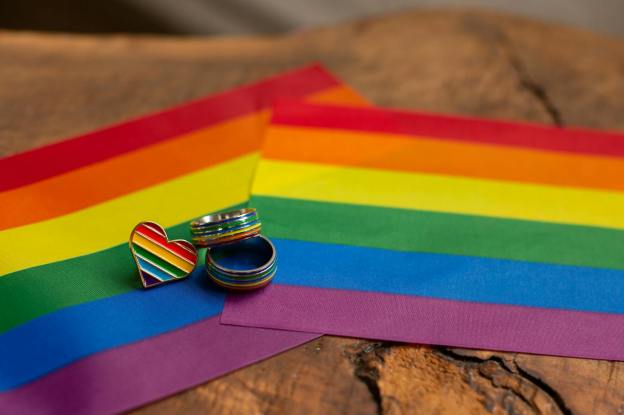
Supporting LGBTQ people is essential for fostering inclusivity, equality and understanding — and it’s just the right thing to do.
Here are five impactful ways allies can step up and make a difference:
1. Educate yourself
As an ally, it’s crucial to invest time in understanding LGBTQ history, issues, and terminology. This includes learning about different identities and experiences within the community. By becoming knowledgeable, you can challenge misconceptions, provide accurate information, and show genuine respect for LGBTQ individuals’ experiences. This education not only helps you become a better ally but also fosters a more inclusive environment where everyone feels valued and understood.
2. Speak out against discrimination
Discrimination can take many forms, from subtle comments to overt actions. Allies should actively confront and condemn homophobic, transphobic, and discriminatory remarks or behaviors. This involves challenging offensive jokes, biased comments, or unfair treatment in various settings. By speaking out, you help create a culture of accountability and support, making it clear that discrimination is unacceptable. Your voice can be powerful in driving change and fostering respect.
3. Support LGBTQ rights
Advocacy plays a crucial role in advancing LGBTQ rights. Allies can participate by voting for inclusive policies, supporting legislative efforts, and joining campaigns that promote equality. Additionally, supporting LGBTQ organizations through donations or volunteer work helps sustain crucial services and initiatives aimed at improving the community’s well-being. By standing up for LGBTQ rights, you help create a society where everyone is treated equally under the law.
4. Create inclusive spaces
Making every environment inclusive and welcoming for LGBTQ people is essential. This involves implementing and promoting policies that ensure safety and respect, using inclusive language, and celebrating LGBTQ identities. Whether in workplaces, schools, or social settings, inclusive practices help LGBTQ individuals feel seen, valued, and safe. As an ally, your efforts to create inclusive spaces can significantly impact the lives of those around you.
5. Listen and offer support
Being an active, empathetic listener is one of the most important ways to support LGBTQ individuals. Offer a non-judgmental space for them to share their experiences and feelings. Providing emotional support, affirming their identities, and respecting their confidentiality fosters trust and demonstrates genuine allyship. By simply listening and offering your support, you contribute to their sense of acceptance and belonging.
Despite advancements in LGBTQ inclusion, many still lack safety at home. By the end of 2023, 75 of 500 anti-LGBTQ bills nationwide became law, coinciding with a five-year high in hate crimes against LGBTQ individuals in 2022.
Rhode Island, New Hampshire, and Delaware earned A+ grades for their strong pro-equality laws and low hate crime rates.
South Dakota, Florida and Wyoming received F grades due to high discriminatory laws and hate crimes. Florida, notably, fell from the 15th-lowest safety score last year to one of the worst.
Nearly 50% of states passed new anti-LGBTQ legislation in 2023.
Hate crimes against LGBTQ people rose 10% between 2021 and 2022, with a 40% increase against transgender individuals.
While 59% of LGBTQ people feel safer due to state laws, 89% believe federal action is necessary for full protection.
The ranking, based on the opinions of 1,000 LGBTQ Americans and information from the Human Rights Campaign, considers parenting freedoms, criminal justice rights, non-discrimination rights, youth protections, and health laws, alongside FBI-reported hate crime frequencies.
Top safe states
Rhode Island: Highest safety grade due to comprehensive protections and low hate crime incidence.
New Hampshire: Low hate crime rates and strong equality protections.
Delaware: Early legalization of same-sex marriage and extensive LGBTQ protections.
Alaska: Elected openly LGBTQ legislator and proposed anti-discrimination bills.
Hawaii: Strong legacy of LGBTQ friendliness and inclusive laws.
Worst states
South Dakota: High rate of hate crimes and many anti-equality laws.
Florida: Drastic decline due to harsh new laws like “Don’t Say Gay.”
Wyoming: Few pro-equality laws and high hate crime rates.
Ohio: High hate crimes and recent “Don’t Say Gay” law.
Alabama: Poor legal environment with many anti-equality laws.
Cleveland, the city known for its rock anthem and industrial past, surprised me with its mix of charm and grit. During my first visit in more than 20 years, I tried to explore deeper than the clichés and discovered a city of contradictions. I shared with friends that I tried keeping an open mind.
But… it was difficult.
First off, let’s talk pavement. Cleveland is all about massive highways and concrete jungles, with parking lots that seemingly stretch for miles. It’s like greenery took a backseat to development. First Energy Stadium, where the Browns play, has what looks like six football fields of parking right along the lakeshore. And in the downtown core, flat-surface parking lots are everywhere.
And yeah, gentrification. It’s everywhere, including Cleveland. Revitalization is sometimes necessary, but we always lose the heart and soul of the place in the process. That’s the vibe I got in Ohio City — a neighborhood in the city that looked like it once was a cool place to visit but has since become the meme of the Edison lights, metal high-top barstools and industrial ambiance with $16 basic burgers and fries.
But hey, it wasn’t all gloom and doom in Ohio City.
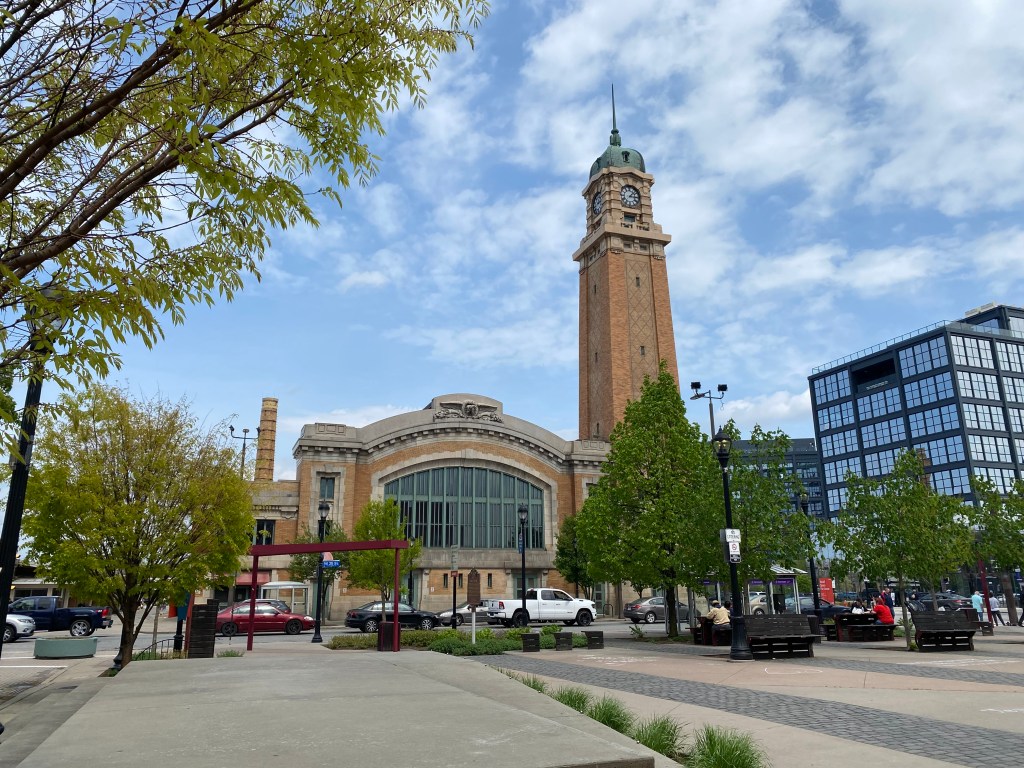
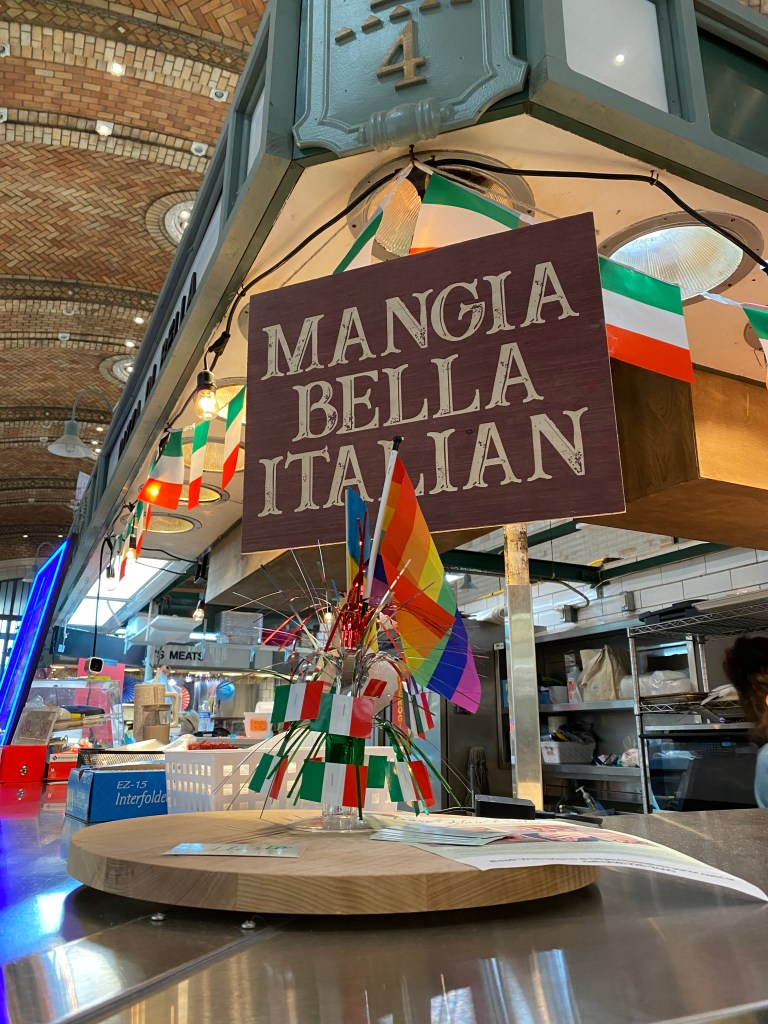
I fell in love with West Side Market in the Ohio City neighborhood. I enjoyed it so much that I went back on my second day before leaving so I could get items to bring back with me.
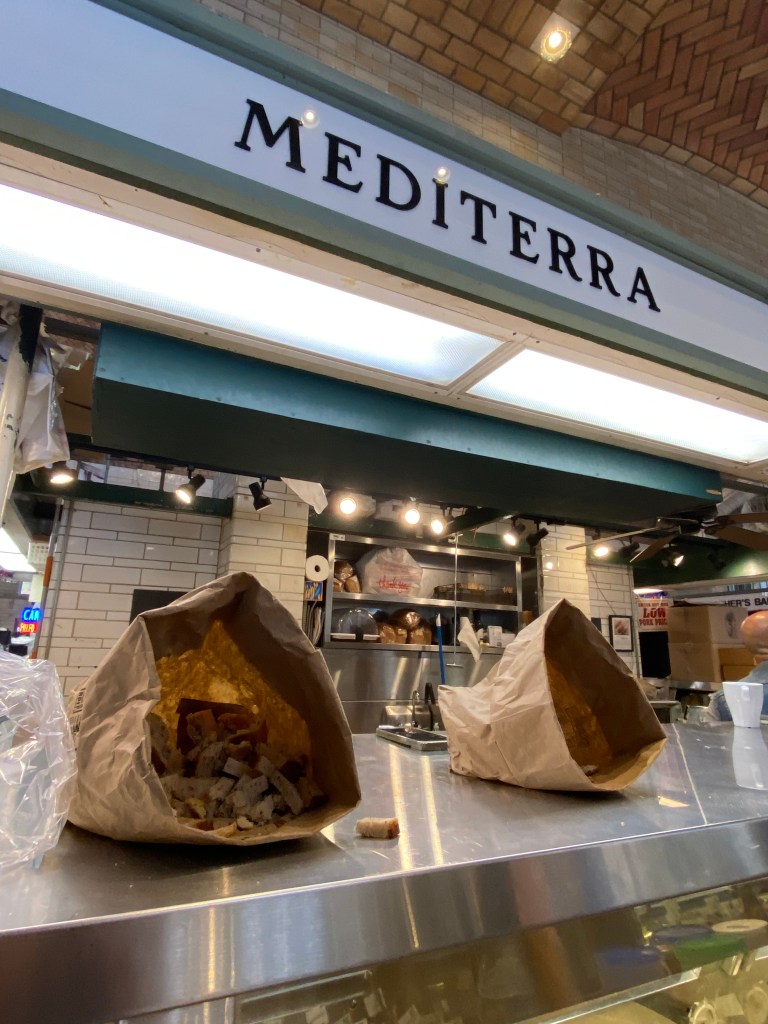
I even found a Pittsburgh-based bread company (Mediterra) and a doughnut/coffee shop (Jack Frost) that used to have an Erie location.
Pittsburgh destroyed its building called the terminal by making it into a suburban strip plaza in the heart of the Strip District (another grossly gentrified neighborhood).
Cleveland redeemed itself with the House from A Christmas Story. Seeing the house was a blast from the past, giving me major nostalgia vibes from the movie. The home is nestled in the Tremont neighborhood.
In keeping with the “A Christmas Story” theme and my fondness for buildings that once served as not only a retail mecca for downtown centers but a gathering place where locals made memories, I walked around the outside of the former Higbee’s in Downtown Cleveland. It’s now JACK Cleveland Casino. The facade remains largely intact, and plaques mark the former department. There are no artifacts acknowledging “A Christmas Story” on the outside, sadly.
Sure, I missed out on some spots like The Arcade, but the 5th Street Arcades across the street offered a nice throwback vibe to when downtowns were the core of retail.
And let’s not forget the quirky sights, like the Free Stamp and the GE Chandelier, which, I learned when building my list of landmarks to see, was installed in 2014. The chandelier hangs from a steel structure that is 44 feet above the intersection of Euclid Avenue and East 14th Street in the city’s Playhouse Square district. (No, I didn’t see it at night. Yes, I will next time I’m there.)
As for the Free Stamp structure (art piece?), this roadside attraction is located in Cleveland’s Willard Park, at the corner of Lakeside Avenue and East Ninth Street. Though it’s near the road toward the Rock & Roll Hall of Fame and Voinovich Bicentennial Park, you might miss it on your way because — despite being considered the world’s largest rubber stamp — it is almost discreetly hidden behind Cleveland City Hall and several trees.
The roadside attractions might be a bit random, but they add that extra dash of personality to this Rust Belt city.
Cleveland’s a bit of a mixed bag for me. I was wowed by Detroit and thought my preconceived notions of Cleveland would have been all for naught. But, in the case of Cleveland, the stereotype rings true. But I’ll be back!










 BobbyCherry.com